How to Check Industrial Coverall Breathability Ratings 2026?

Time:2026-10-31 Author:Amelia
0%

Industrial coveralls must do more than resist oil, dust, or sparks. They also need to let heat and perspiration escape during real work. So, what are the breathability ratings for industrial coveralls? There is no single universal score. Buyers should check the fabric test method, reported units, and garment construction before comparing products.

Professor Jintu Fan, a researcher in clothing comfort and textile performance, offers a useful principle: “Breathability should be judged by how effectively clothing manages heat and moisture during wear.” Treat this as a practical summary, not a substitute for a product’s test report. A lab result can help, but it cannot capture every shift, climate, or task.

Look for water-vapor resistance, often reported as Ret, or water-vapor transmission, commonly reported as MVTR. Lower Ret generally indicates easier moisture transfer; higher MVTR generally indicates more vapor passing through. Check the test conditions, too. Results can differ by method, temperature, humidity, and fabric treatment. Small details matter.

A coated coverall may block liquid splash yet feel clammy after hours beside a warm machine. Seams, closures, and layered panels can also affect comfort. Ask suppliers for current, third-party test documentation and confirm that it applies to the exact fabric and finished garment. Then consider fit, workload, and protective hazards. Ratings inform the choice, but they do not tell the whole story. A careful trial helps.
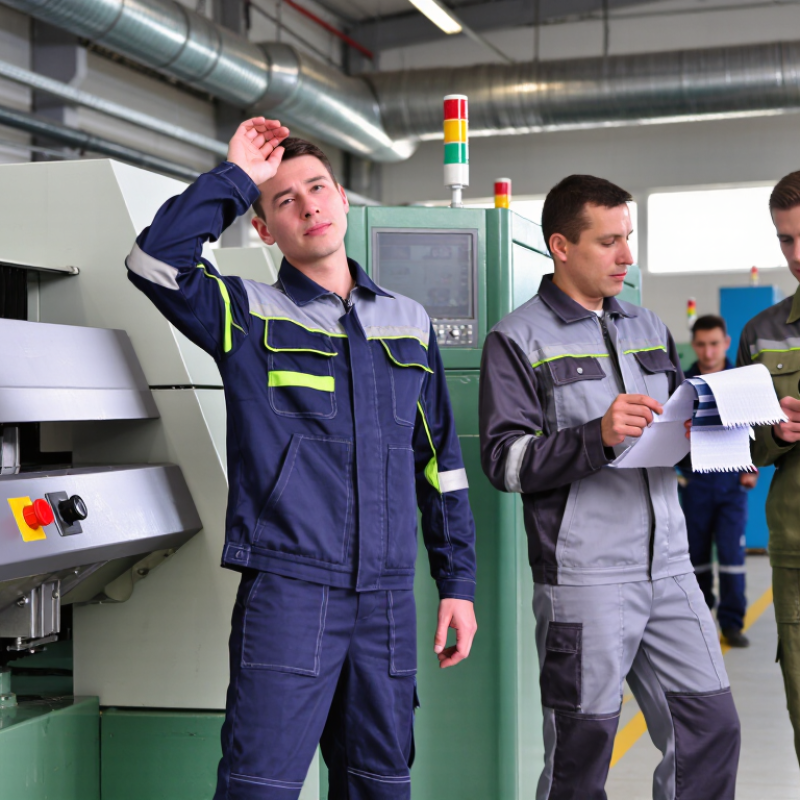
How to Check Industrial Coverall Breathability Ratings 2026?

Define Breathability Ratings for Industrial Coveralls

Breathability ratings describe how easily heat and water vapor pass through coverall fabric. One common measure is RET, or water-vapor resistance, tested using the sweating-guarded hotplate method in ISO 11092:2014. Lower RET means less resistance to vapor movement. Lower is better. Another measure, MVTR, reports the amount of water vapor passing through fabric over time. Its results cannot be directly compared with RET: the tests use different methods and units. For context, EN 343:2019 uses RET classes for rain-protective clothing, with Class 4 indicating RET of 15 m²·Pa/W or less. That classification is not a universal rating for every industrial coverall.

A rating describes fabric performance under controlled test conditions, not how cool a worker will feel on a hot production line. Seams, coatings, underlayers, fit, humidity, and movement all matter. NIOSH’s 2016 Criteria for a Recommended Standard: Occupational Exposure to Heat and Hot Environments notes that protective clothing can limit heat loss. Check the test method, units, and garment configuration before comparing product data. A plain fabric swatch may breathe well, while a finished coverall with sealed seams feels clammy. That difference is easy to overlook. Ratings are useful, but they do not reproduce every shift or worksite.

Identify the Test Standards and Methods Used

A useful industrial coverall breathability rating starts with the test method, not a vague “breathable” label. ASTM D737 and ISO 9237 measure air permeability by drawing air through a fabric under a specified pressure difference. Results depend on the test pressure, sample area, and fabric conditioning. A coated panel may behave very differently from an uncoated one.

For moisture-vapor resistance, ISO 11092 uses a sweating guarded hotplate to measure how readily water vapor passes through fabric. Ret is the reported resistance value; lower values indicate less resistance to vapor transfer. Do not compare figures unless the same method and test conditions were used. The U.S. Bureau of Labor Statistics recorded 43 worker deaths from environmental heat in 2022, a reminder that clothing choices matter—but breathability alone cannot prevent heat illness.

Tips: Request the full laboratory report, including method, pressure setting, temperature, humidity, and whether seams or coatings were tested. Check the actual garment, too. A fabric swatch cannot reveal trapped heat around sealed seams or tight cuffs. Small detail, big difference. Ratings are useful, but one number never tells the whole story.

Read and Compare Airflow and Moisture-Vapor Results

An industrial coverall’s breathability is not captured by one number. Air-permeability results show how readily air passes through fabric under a stated pressure difference. Moisture-vapor results show how water vapor moves through the material, but test methods can differ. Read the method, units, and conditioning details before comparing figures. Small print matters.

Check whether airflow is reported as volume per area over time, and note the pressure used. A higher airflow value often means easier air passage, not automatically better comfort or adequate protection. For vapor data, distinguish a transmission rate from evaporative resistance: higher transmission may indicate more vapor transfer, while lower resistance generally favors evaporation. Do not compare unlike methods as if they were interchangeable.

Compare samples tested at the same temperature, humidity, pressure, and fabric orientation. Coatings and seam construction can also affect performance in wear. If a data sheet lists only a headline rating, ask for the full test report and its repeatability range. The result is a useful clue, not a promise about a hot shift. Also check whether protective requirements limit more open fabric structures. Comfort and barrier performance can pull in opposite directions, and that trade-off deserves a second look.

Match Ratings to Workplace Conditions and Hazards

Match the breathability rating to the job, not just the weather. For textiles, ISO 11092 measures evaporative resistance, or Ret, in m²·Pa/W. Lower Ret means water vapor can pass through more readily. For rainwear assessed under EN 343:2019, class 4 means Ret is 15 or lower; class 3 is above 15 through 25; class 2 is above 25 through 40. Check which test and standard a label uses. Ratings from different methods are not directly interchangeable.

Consider the wearer’s actual conditions. A worker moving heavy equipment in a hot, humid plant produces more body heat than someone monitoring a cool, dry workshop. Layering, respirator use, and limited air movement can also trap heat. The US Bureau of Labor Statistics recorded 43 fatal work injuries involving environmental heat in 2022. That figure is a reminder: breathability matters, but it cannot replace heat controls, rest breaks, hydration, or hazard-specific protection. A more breathable fabric may not protect against chemical splash, sparks, or biological exposure.

Compare the garment’s measured performance with the task’s hazards and expected exertion. Ask whether the rating applies to the fabric or the finished coverall; seams, closures, and coatings can change performance. This detail is easy to miss. I would also check fit and planned layering during a realistic wear trial, because a laboratory score cannot fully represent a moving worker on a humid shift. Lower Ret is useful, but it is not a complete safety verdict.

How to Check Industrial Coverall Breathability Ratings 2026? — Match Ratings to Workplace Conditions and Hazards
Indicative Breathability Band Moisture-Vapor Transmission Rate (MVTR) Typical Wear Conditions Workplace Examples Hazard and PPE Considerations Selection Check
Low Below 3,000 g/m²/24 h Short-duration tasks, cool environments, or situations where a barrier layer is the main requirement. Brief splash-response work; tasks in cool, controlled indoor areas. May increase heat and moisture buildup during prolonged or strenuous work. A high barrier rating does not automatically mean protection against every chemical or biological hazard. Confirm the garment’s tested protection claims, seam construction, and permitted wear duration. Plan work-rest and cooling measures where needed.
Moderate 3,000–8,000 g/m²/24 h Light-to-moderate activity in temperate conditions, with intermittent movement and manageable heat loads. Routine inspection, equipment servicing, and general maintenance in moderate indoor conditions. Consider whether the fabric and closures provide the required protection from dust, liquid splash, or other identified hazards. Breathability alone is not a protective certification. Compare results only when the test method and test conditions are comparable. Check fit, ventilation openings, and compatibility with other PPE.
High 8,000–15,000 g/m²/24 h Moderate-to-strenuous work where perspiration management is important and the required protective design permits higher vapor transfer. Extended warehouse, utilities, or outdoor maintenance tasks in mild-to-warm weather. Higher vapor transfer may not be suitable where a continuous liquid, chemical, or biological barrier is required. Evaluate the complete garment, not fabric breathability alone. Check that the garment’s hazard-specific standard, seams, closures, and design meet the workplace risk assessment; then assess breathability and thermal comfort.
Very high Above 15,000 g/m²/24 h High-activity work in warm conditions where the required hazard protection can be achieved with a more vapor-permeable construction. Physically demanding work in warm, dry environments, subject to the site’s exposure assessment. Do not infer chemical resistance, liquid impermeability, flame resistance, or particulate protection from a high MVTR result. Some hazards require a less permeable barrier. Verify the exact garment configuration and its certified use. Confirm that increased vapor transfer does not compromise the required protective barrier.
Use RET as a complementary measure RET is reported in m²·Pa/W; lower values indicate less resistance to evaporative heat transfer. Useful when comparing evaporative resistance under the same test method and conditions. Comparative fabric or clothing assessments for thermal comfort. RET is a comfort-related measurement, not a chemical- or hazard-protection rating. Results may not be directly interchangeable with MVTR results. Look for the stated test method, such as ISO 11092 for thermal and water-vapor resistance, and compare like-for-like results.
Important: The MVTR bands above are indicative screening ranges, not universal pass/fail classes or regulatory requirements. MVTR results depend on the test method and conditions; for example, ASTM E96 procedures can produce different results depending on the chosen method. Air permeability, commonly assessed using ISO 9237, measures airflow through fabric and is not the same as water-vapor transmission. Select coveralls through a workplace risk assessment and verify the applicable protective standard and garment documentation.

Verify Product Labels and Manufacturer Test Documentation

A breathability claim on an industrial coverall label is useful only when its meaning is clear. Look for a stated measure, such as water-vapor transmission rate (MVTR) or evaporative resistance (Ret), and check the unit beside it. A number alone is not enough. Some labels describe fabric performance rather than the finished garment, which may behave differently around seams, closures, and coated panels.

Ask the manufacturer for test documentation tied to the exact coverall model, fabric, and revision. Check the test method, laboratory, test date, and sample conditions. Was the sample a fabric swatch or a complete garment? That distinction matters. Compare results only when the methods and units match; different test procedures can produce numbers that look comparable but are not. Also ask whether protective layers, coatings, or laundering affect the reported result.

Keep a photo of the label with the document you receive. Note any gaps, such as an unlabeled unit or missing method, and request clarification before relying on the rating. A test on a new, dry sample may not represent a humid work shift. I might still want more context than a document provides; test figures cannot capture every wearer’s comfort or working conditions.

FAQS

What does a breathability rating for industrial coveralls measure?

It describes how heat or water vapor moves through fabric under controlled test conditions. It cannot predict exactly how cool a worker will feel.

What does a RET value tell me?

RET measures resistance to water-vapor transfer. Lower values mean vapor passes through more easily. Lower is better.

Can I compare RET and MVTR figures directly?

No. They use different test methods and units. Compare figures only when the method and conditions match.

How is air permeability tested?

Air is drawn through fabric under a set pressure difference. Test pressure, sample area, and fabric conditioning can change the result.

Why might a coverall feel clammy despite a good fabric rating?

Sealed seams, coatings, tight cuffs, underlayers, and humidity can trap heat. A fabric swatch does not show the whole garment. That matters.

What details should I check in a laboratory report?

Look for the test method, pressure, temperature, humidity, and tested garment configuration. Check whether seams and coatings were included.

Does a breathability rating guarantee protection from heat stress?

No. Protective clothing can limit heat loss, and work conditions also matter. Ratings cannot prevent heat illness by themselves.

Is a RET value of 15 or less a universal coverall rating?

No. That threshold appears in a rain-clothing classification, not as a universal rating for industrial coveralls. I used to trust one number too much.

Conclusion

What are the breathability ratings for industrial coveralls, and how can they help you choose suitable workwear? These ratings describe how readily air and water vapor pass through a fabric, offering an indication of heat and moisture management rather than a complete measure of comfort or protection. To assess them, first identify the test standard and method used, since different procedures may produce results that are not directly comparable. Look for airflow measurements and moisture-vapor transmission results, and check the units, test conditions, and whether higher or lower values indicate greater breathability for each measure.

Compare the results with the expected work environment, including temperature, humidity, physical activity, and exposure to workplace hazards. A highly breathable coverall may be useful during strenuous work in warm conditions, but breathability should not take priority over required protective performance. Before making a decision, verify that product labels match the intended use and review the manufacturer’s test documentation for methods, results, and limitations.

Amelia

Amelia

Amelia is a seasoned marketing professional with a wealth of expertise in our company’s core offerings. With an unwavering passion for driving growth and innovation, she plays a pivotal role in shaping our marketing strategies and enhancing brand visibility. A key aspect of her responsibilities......