 Bloc Medical
Safe chemotherapy administration begins with a practical question: Which PPE is required for chemotherapy administration? The answer depends on the drug, route, dose, preparation method, and expected contact. A tidy seven-item list can mislead. Risk changes when a nurse connects tubing, handles a contaminated syringe, or cleans a spill.
The National Institute for Occupational Safety and Health reports that more than 8 million U.S. healthcare workers may face hazardous-drug exposure. Even small droplets can reach skin, eyes, clothing, or nearby surfaces. The Oncology Nursing Society and NIOSH both emphasize task-based controls, trained staff, and appropriate protective equipment. PPE supports engineering controls and safe work procedures. It does not replace them.
This guide examines seven PPE categories used during chemotherapy administration, including chemotherapy-tested gloves, protective gowns, eye and face protection, respirators, sleeve covers, shoe covers, and head protection. USP <800> also provides a widely recognized framework for reducing hazardous-drug exposure across healthcare settings. Its recommendations highlight the importance of protecting staff during receiving, transport, administration, spill response, and waste handling.
Details matter. Gloves should fit securely, remain intact, and change after contamination or according to facility policy. A gown must resist liquid penetration and close fully at the front. Eye protection becomes critical when splashing is possible. Respiratory protection requires a proper program, fit testing, and medical clearance where applicable.
There is room for reflection. PPE selection is sometimes treated as a checklist exercise. That approach may overlook workflow hazards, damaged packaging, or rushed doffing. The safest practice combines current evidence, product compatibility, clinical judgment, and documented institutional procedures.
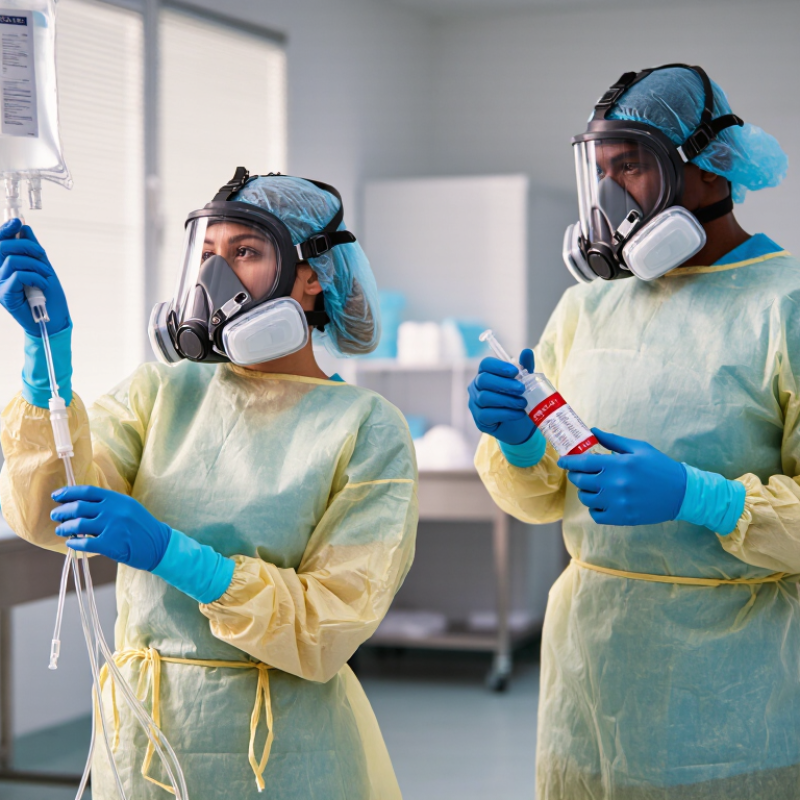
Chemotherapy drugs can harm staff through skin contact, inhalation, splashes, or accidental ingestion. Exposure may occur during preparation, administration, disconnection, spill cleanup, or waste handling. PPE must match the task, drug, route, and workplace risk assessment. A checklist helps, but it cannot replace training.
The seven essential PPE choices include chemotherapy-tested gloves, an impermeable protective gown, sealed eye protection, a face shield, shoe covers, a hair cover, and a fit-tested respirator when inhalation risks require it. Gloves should be powder-free and tested against hazardous drugs, such as through ASTM D6978 methods. Many procedures require two pairs. Change them immediately after contamination, tearing, or task completion. Gowns need closed backs, tight cuffs, and resistance to liquid penetration.
Eye protection matters during connection, disconnection, and spill response. A face shield adds protection for the whole face, but it does not replace goggles.
Respirators require medical evaluation, fit testing, and a written respiratory program. They are not suitable substitutes for ventilation or careful technique.
Closed-system transfer devices can reduce exposure, though they are engineering controls rather than PPE.
In practice, small failures create real risk. A loose cuff can expose the wrist. A rushed glove removal can contaminate clean clothing. Staff should inspect PPE before use and follow local hazardous-drug procedures and safety data. No checklist is perfect. Supervisors should review near misses, because routine work can hide changing hazards.
Use chemotherapy-tested gloves, a protective gown, eye protection, and a face shield when splashes may occur. Add respiratory, head, sleeve, or shoe protection when risk assessment requires it.
Two glove layers provide extra protection during handling and removal. Inspect both pairs for tears before contact. Small gaps matter.
Replace gloves after contamination, damage, or according to facility policy. Some procedures require changes about every 30 minutes. Do not delay.
Select a disposable, low-permeability gown with long sleeves and closed cuffs. It should close securely at the back. Ordinary cloth may absorb droplets.
Goggles protect the eyes from splashes. A face shield adds coverage around the cheeks and mouth. Use both when the task could spray liquid.
Not always. The drug, task, ventilation, and spill conditions determine the need. A fit-tested respirator may be needed during spill response.
They help limit contamination on hair, clothing, sleeves, and floors. They are especially useful in controlled preparation areas and during cleanup. Floors are easily overlooked.
Follow the facility’s written removal procedure and current safety information. Remove contaminated outer gloves before touching clean supplies. Avoid touching gown sleeves. That step is easy to underestimate.
Chemotherapy administration involves exposure to hazardous drugs that may cause skin irritation, organ damage, reproductive harm, or other health risks through contact, splashes, droplets, aerosols, or contaminated surfaces. This guide explains Which PPE is required for chemotherapy administration and why each item matters. The seven essential categories include chemotherapy-resistant gloves, protective gowns, eye protection, face protection, respiratory protection when risk assessment requires it, and suitable footwear or shoe covers. Together, these barriers help protect healthcare workers from accidental exposure during preparation, administration, spill response, and waste handling.
The article also emphasizes correct PPE selection, inspection, donning, and removal. Gloves and gowns should be appropriate for hazardous-drug handling, while goggles or face shields protect against splashes. Respiratory protection should be used according to workplace procedures and exposure risks. PPE must be changed when damaged or contaminated, disposed of in designated containers, and removed carefully to prevent transferring residue to skin, clothing, or clean areas. Consistent training and safe work practices are essential components of effective chemotherapy protection.
