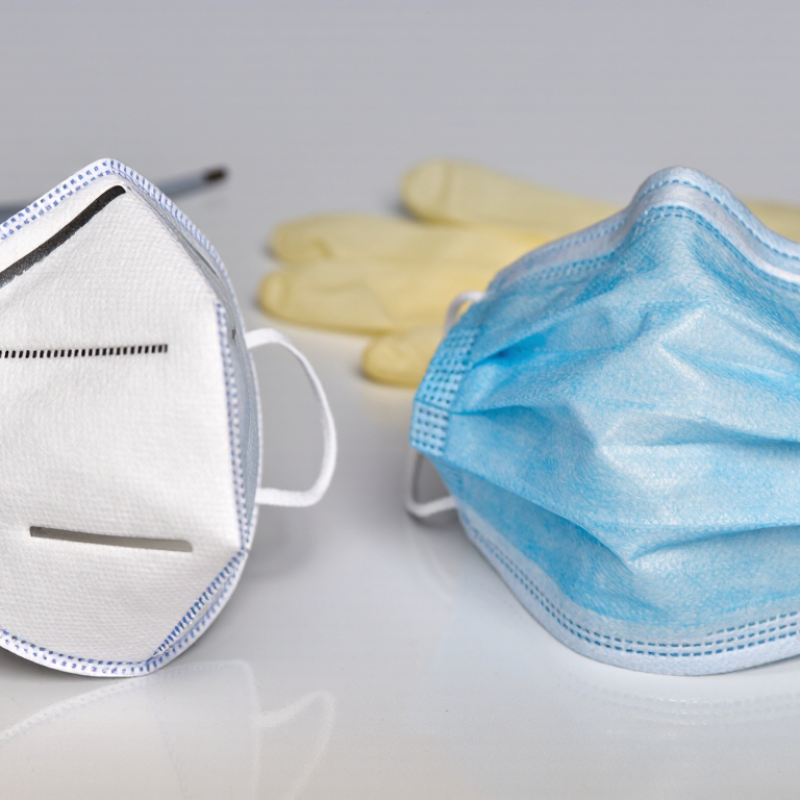
Choosing the right face covering begins with one practical question: What is the difference between a respirator and a surgical mask? The answer affects protection, comfort, fit, and workplace safety. A respirator, such as a NIOSH-approved N95, is designed to seal closely around the face. It filters at least 95% of airborne particles when correctly fitted and worn. A surgical mask usually rests more loosely. It helps block large droplets, splashes, and some particles, but it does not create the same facial seal.
The difference becomes visible in real settings. An N95 should sit firmly across the nose and cheeks, with minimal air leakage around the edges. A surgical mask may shift when speaking or walking quickly. NIOSH explains that respirators “are designed to protect the wearer,” while surgical masks primarily provide barrier protection and source control. This distinction is supported by the CDC and NIOSH respiratory protection guidance, as well as OSHA’s Respiratory Protection Standard, 29 CFR 1910.134. The World Health Organization also emphasizes fit, correct use, and risk-based selection.
Yet the comparison is not perfectly simple. Protection depends on fit, seal checks, storage, facial hair, humidity, and consistent use. Even a high-performing respirator can fail when worn below the nose. That is an uncomfortable detail. For 2026, this guide will compare filtration, fit, breathability, fluid resistance, certification, and everyday usability. It will also examine evidence from CDC, NIOSH, OSHA, ASTM International, and WHO reports, helping readers choose more carefully for clinical work, public spaces, and higher-risk environments.
What Is a Respirator and How Does It Differ From a Surgical Mask?
A respirator is designed to reduce inhalation of airborne particles. It uses a filtering material and a close facial seal. When fitted correctly, it can limit leaks around the nose, cheeks, and chin. Some respirators filter particles only, while specialized models address certain gases or vapors. The label matters.
A surgical mask serves a different purpose. It is loose fitting and mainly helps block large droplets, splashes, and respiratory emissions from the wearer. It may offer some particle filtration, but air can enter through open edges. It is not a dependable substitute for a well-fitted respirator in dusty or aerosol-heavy settings. The difference sounds simple. Real-world fit is not.
Tips: Choose the protection level for the actual hazard. Check the seal each time you wear a respirator. Facial hair, glasses, sweat, and movement can weaken the fit. Replace any mask that becomes wet, damaged, or difficult to breathe through. Follow workplace instructions and current public-health guidance. If breathing feels restricted, leave the contaminated area and seek qualified advice. One detail people often overlook: a higher-rated filter cannot correct a poor seal.
2026 Best Respirator vs Surgical Mask: What Is the Difference?
What Is a Respirator and How Does It Differ From a Surgical Mask?
The chart compares minimum filtration benchmarks from selected standards. N95, FFP2, and FFP3 are tight-fitting respirator classifications tested for particle filtration. ASTM surgical mask levels use bacterial filtration efficiency testing, which uses a different test method and particle size, so the percentages should not be treated as directly equivalent. Respirators are designed to seal closely to the face, while surgical masks are generally loose-fitting and are mainly intended for source control, splash resistance, and protecting the wearer from large droplets.
How Respirators and Surgical Masks Filter Air and Control Exposure
A respirator and a surgical mask control exposure in different ways. A respirator is designed to seal closely against the face. Its filter removes many airborne particles during inhalation. With a proper fit, it can reduce the amount of contaminated air reaching the wearer. Some respirators also reduce particles released by the wearer.
A surgical mask fits more loosely. It helps block large droplets, splashes, and some particles leaving the mouth and nose. However, air can enter around the sides, especially near the cheeks and nose. This leakage limits protection against fine airborne particles. The mask can still support source control in clinics, laboratories, and crowded indoor areas.
Fit matters as much as filtration. A respirator should cover the nose, mouth, and chin without gaps. Facial hair, poor adjustment, and damp material can weaken the seal. A user should perform a seal check each time. Practical training also helps people recognize pressure, breathing resistance, and strap problems.
Small details matter. A mask pulled below the nose offers little control. A respirator worn under the chin offers none. It is tempting to compare filter percentages alone, but that approach misses real-world exposure. Room ventilation, wearing time, movement, and correct handling also influence protection. The choice may require professional risk assessment, especially where dust, aerosols, or infectious particles are present.
Which Respirator and Surgical Mask Standards Should You Know?
Respirator and surgical mask standards measure different things. A NIOSH-approved N95 is a US respirator standard: it tests filter performance and requires the respirator to seal closely to the wearer’s face. In workplaces, fit testing helps confirm that seal. A loose edge can let air bypass the filter.
Other respirator standards include FFP2 under Europe’s EN 149 and KN95 under China’s GB 2626. These use different certification systems, so similar labels do not mean products are automatically interchangeable. Check the exact standard and approval details on the packaging. Fit matters.
Surgical masks are assessed differently.
In the United States, ASTM F2100 classifies medical masks by performance, including filtration and resistance to fluid splashes. In Europe, EN 14683 includes Type I, Type II, and Type IIR; Type IIR adds fluid resistance. These masks are generally designed to reduce droplets leaving the wearer, rather than provide the close facial seal expected of a respirator.
The labels can be confusing.
It is easy to focus on a filtration number and overlook intended use, fit, or fluid resistance. Standards also vary by region, and a mask’s appearance alone cannot verify its certification. Check the manufacturer’s stated standard and local guidance, especially when exposure risk is high.
When Should You Choose a Respirator Instead of a Surgical Mask?
A respirator and a surgical mask serve different purposes. A surgical mask sits loosely on the face and mainly blocks large droplets, splashes, and outward emissions. It does not reliably seal around the nose and cheeks. Air can enter through small gaps.
A respirator is the better choice when you may inhale fine airborne particles or infectious aerosols. This includes crowded indoor spaces, dusty renovation areas, wildfire smoke, or close care of someone with a respiratory infection. Choose an approved particulate respirator with a close facial seal. Facial hair, glasses, and incorrect sizing can reduce protection. Fit matters more than appearance.
Check the seal every time. Breathe in gently and feel for air escaping near the edges. If air reaches your eyes or cheeks, adjust the straps or select another size. A respirator can feel hot and restrictive, especially during physical work. People with asthma, heart conditions, or breathing concerns should seek professional medical advice before prolonged use.
The mask label can mislead. A higher rating does not fix a poor fit. Surgical masks remain useful for source control, splash protection, and lower-risk settings. Risk assessment should consider airflow, exposure time, activity, and local health guidance. Sometimes, the practical choice is not perfect. Recheck it.
2026 Best Respirator vs Surgical Mask: What Is the Difference? When Should You Choose a Respirator Instead of a Surgical Mask?
General comparison of respirators and surgical masks. Protection depends on the product, fit, correct use, and exposure conditions.
| Comparison Dimension |
Respirator |
Surgical Mask |
| Primary purpose |
Designed to reduce the wearer’s inhalation of airborne particles when the respirator is appropriate for the hazard and fits well. |
Designed mainly to help block larger droplets and splashes and to reduce the wearer’s emissions. It is not designed to form a tight seal. |
| Fit and seal |
Must fit closely to the face. Gaps around the edges can let unfiltered air enter. Workplace use may require fit testing and a respiratory protection program. |
Usually fits more loosely, so air can leak around the sides. A close fit may improve coverage but does not make it a sealed respirator. |
| Filtration and protection |
Certified particulate respirators are tested to applicable standards. For example, N95-class respirators are tested to filter at least 95% of specified airborne particles under standard test conditions; this is not a guarantee of real-world protection. |
Performance varies by mask design and standard. It generally provides less dependable protection from inhaled fine airborne particles than a well-fitting, certified respirator. |
| Fluid and splash resistance |
Varies by model. A particulate respirator should not be assumed to provide fluid resistance unless its labeling or applicable standard specifies it. |
Some surgical masks are tested for resistance to fluid splashes. Check the product’s intended use and applicable labeling. |
| Common examples |
Filtering facepiece respirators and reusable elastomeric respirators with suitable particulate filters. Select a model certified for the relevant hazard and jurisdiction. |
Medical or surgical masks intended for clinical or source-control use. Construction and performance requirements differ by product and standard. |
| When it may be the better choice |
Consider a suitable respirator when stronger protection from airborne particles is needed, such as in crowded indoor settings, during periods of elevated respiratory-virus transmission, or for certain occupational exposures. |
May be appropriate when the goal is source control, splash protection, or use in settings where a surgical mask is specified and the airborne risk is not the primary concern. |
| Important limitations |
Protection can be reduced by poor fit, facial hair at the sealing surface, damage, moisture, incorrect wearing, or using a respirator not suited to the hazard. Some models make breathing more difficult or are unsuitable for certain users. |
Loose fit limits protection against fine airborne particles. A surgical mask is not a substitute for a respirator when a tight-fitting respirator is required for the hazard. |
| Choosing and using |
Check certification and intended use, select the right size and model, follow the manufacturer’s instructions, and check the seal each time it is worn. Follow workplace requirements where applicable. |
Choose a well-constructed mask intended for the task, cover the nose and mouth, secure it as designed, and replace it if wet, damaged, or soiled. |
| Simple decision guide |
Choose a properly fitted, hazard-appropriate respirator when you need increased wearer protection from airborne particles or when workplace rules require one. |
Choose a surgical mask when the main need is source control or splash protection and a respirator is not required for the exposure. |
Safety note: No mask or respirator eliminates risk. Follow current public-health guidance, workplace rules, product instructions, and advice from a qualified safety or healthcare professional. Respirators with exhalation valves may not provide the same source control as unvalved models.
How to Wear, Fit, Replace, and Dispose of Each Mask Type
2026 Best Respirator vs Surgical Mask: What Is the Difference?
A respirator seals around the nose and mouth; a surgical mask usually does not. NIOSH certification requires N95-class respirators to filter at least 95% of airborne particles under test conditions. Real protection still depends on fit.
Before entering a dusty or infectious environment, place the respirator over your nose, pull the straps evenly, and perform a user seal check. Air should not leak around the edges. Facial hair, glasses, and twisted straps can weaken the seal.
Surgical Mask and Respirator Use
Surgical masks should cover the nose, mouth, and chin without gaps. Avoid touching the front. The CDC advises replacing a respirator when it becomes damaged, dirty, difficult to breathe through, or loses its shape.
WHO guidance similarly recommends changing medical masks when damp or soiled, rather than washing or reusing them. Surgical masks are generally single-use. Respirators may have different reuse instructions, so workplace procedures and manufacturer directions matter.
Safe Disposal and Fit Checks
Dispose of used masks by holding the straps, not the contaminated front. Place them in a suitable waste bin, then clean your hands.
In practice, fit checks are easy to rush. That is a weakness worth admitting. A mask can look correct while leaking near the cheeks. Reports from occupational safety agencies repeatedly emphasize fit, correct wearing, and timely replacement—not appearance alone.
Conclusion
A respirator and a surgical mask serve different protective purposes. What is the difference between a respirator and a surgical mask? A respirator is designed to filter airborne particles and create a close seal around the face, helping reduce inhalation exposure when fine particles or aerosols may be present. A surgical mask is generally loose-fitting and mainly helps block larger droplets, splashes, and respiratory secretions, while also reducing the spread of particles from the wearer. Their performance depends on filtration standards, fit, and proper use.
Choosing between them depends on the situation and the level of exposure. A respirator is usually more suitable for dusty environments, procedures involving airborne particles, or settings where stronger inhalation protection is needed. A surgical mask may be appropriate for routine source control and basic splash protection. Both should be worn over the nose and mouth, checked for damage, replaced when wet or soiled, and removed carefully. Respirators require a secure fit, while surgical masks should be changed regularly and disposed of responsibly.
 Bloc Medical
